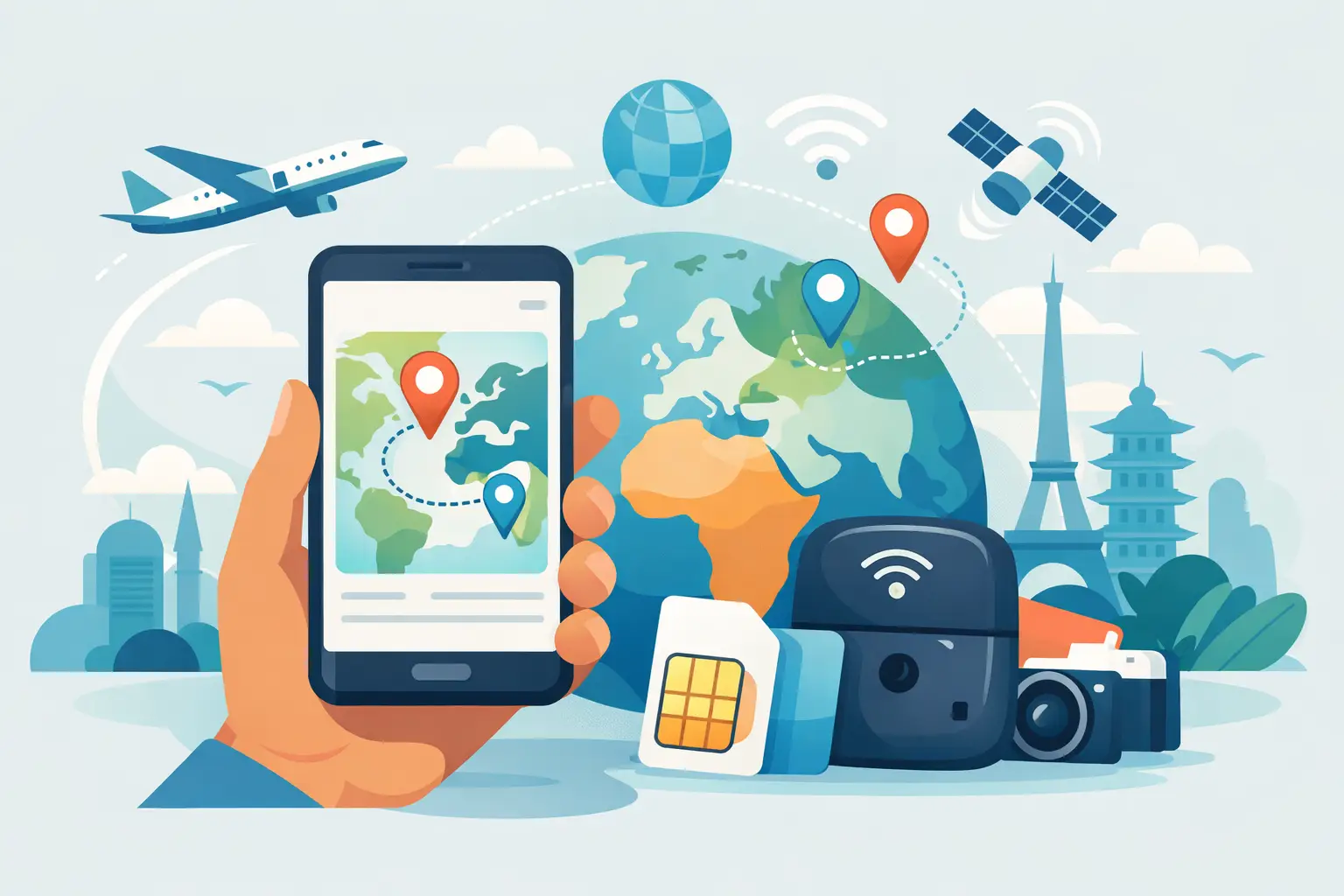
You land, open your phone, and realize your ride app will not load, your hotel check-in email is buried in your inbox, and your carrier just texted a roaming rate that feels like a penalty. A good international mobile data guide starts there - with the first five minutes after landing, when connectivity stops being a nice extra and becomes part of the trip.
If you want mobile data abroad without overpaying or wasting time at an airport kiosk, your main options are straightforward: keep your home carrier’s roaming plan, buy a local SIM, or use an eSIM data plan before you travel. The right pick depends on how long you’re staying, where you’re going, how much data you actually use, and whether your phone supports eSIM.
International mobile data guide: your main options
Roaming is the easiest option because it requires almost no setup. Your home carrier handles the connection, your regular number often keeps working, and you can get online as soon as the plane touches down. The trade-off is cost. Some roaming passes are reasonable for short business trips, but many travelers pay a premium for convenience and end up using less data than they wanted because they are worried about overages.
A local physical SIM usually lowers the cost per gigabyte, especially if you’re staying in one country for a while. That said, buying one can be slow. You may need to find a store, show ID in some destinations, deal with language barriers, swap out your current SIM, and keep track of a tiny card you do not want to lose. It works well for longer stays, but it is rarely the fastest option.
An eSIM sits in the middle in the best way. It gives you the speed of digital setup without the inflated pricing that often comes with carrier roaming. You buy online, receive activation details right away, scan a QR code, and connect within minutes on a compatible device. For travelers who care about control, speed, and avoiding airport setup, eSIM is usually the cleanest answer.
How to choose the right international mobile data plan
Start with your route. If you are visiting one country for a week, a country-specific plan is often the cheapest option. If you are moving across Europe or hopping between several countries in Asia, a regional plan is usually more practical because you avoid buying separate packages every time you cross a border. For frequent flyers with unpredictable schedules, a global plan can make sense even if the price per gigabyte is a little higher.
Next, estimate your data use honestly. Many travelers think they need unlimited data when what they really need is enough data for maps, messaging, email, rideshare apps, and occasional social media. If you will be on hotel or office Wi-Fi most of the day, a smaller plan may be enough. If you plan to tether your laptop, join video calls, or upload content on the move, buy more than the bare minimum. Running out of data on day two is not a bargain.
Trip length matters too. A three-day city break and a three-week work trip should not be treated the same way. Short trips favor fast setup and just-enough data. Longer trips make pricing and top-up flexibility more important. The best plans are not always the biggest ones. They are the ones that fit your actual usage without forcing you to overspend.
Why eSIM works well for international travel
The biggest advantage is timing. You can install an eSIM before departure and activate it when you arrive, which removes the usual scramble for airport Wi-Fi. That means you can book transportation, message your host, and open maps immediately.
The second advantage is convenience. There is no physical card to insert, no need to visit a store, and no waiting for shipping. For many travelers, that alone is reason enough to switch. If your schedule changes, digital delivery also makes last-minute purchases easy.
The third advantage is flexibility. Many providers let you choose by country, region, or global coverage. Good services also support multiple payment methods and fast checkout, which matters when you are buying from the gate, from a hotel lobby, or while already abroad. eSimy, for example, is built around that kind of low-friction setup, with instant delivery, QR activation, and support if you need help getting connected.
There are limits, though. Your phone has to be eSIM-compatible and unlocked. Some plans are data-only, which is fine for travelers who use WhatsApp, FaceTime, or other internet-based apps, but less ideal if you need a traditional local phone number. Not every traveler needs voice service, but you should know what you are buying before checkout.
What to check before you buy
Device compatibility comes first. Newer iPhones, many recent Samsung Galaxy models, Google Pixel devices, and other flagship phones often support eSIM, but support varies by model and region. A phone can be new and still be locked to a carrier, which prevents outside plans from working. Check both compatibility and carrier lock status before you rely on an eSIM for your trip.
Coverage is next. Do not assume every plan has the same network quality in every country. One provider may perform very well in Japan and less well in rural parts of another destination. If your trip includes remote areas, islands, or cross-border train travel, network partnerships matter. Coverage maps and destination-specific details are worth checking.
Then look at activation rules. Some plans start the moment you install them, while others begin when they first connect to a supported network. That difference matters. Installing too early can waste valid days if the policy is based on installation instead of first use.
Finally, read the plan details for speed and top-ups. Some plans reduce speeds after a certain amount of usage. Others stop completely until you buy more data. Neither is automatically bad, but you want to know the rule before you are relying on the connection for work or navigation.
Common mistakes travelers make
The most expensive mistake is assuming your carrier’s travel pass is always good enough. It may be fine for a quick trip, but many travelers never compare the total cost against prepaid international data options. Convenience has a price, and sometimes it is much higher than it needs to be.
Another common mistake is waiting until arrival to figure it out. Buying at the airport can work, but it often means limited choices, higher prices, and setup stress when you are tired. A better move is to get the plan sorted before departure, even if you do not activate it until you land.
Travelers also underestimate their need for data in transit. It is not just maps. It is boarding pass access, banking verification texts, translation apps, restaurant bookings, work messages, and backup communication if plans change. If you are choosing between barely enough and comfortably enough, comfortably enough usually wins.
A simple setup that saves time
For most US travelers with an unlocked, eSIM-compatible phone, the practical path is simple. Choose a country, regional, or global eSIM plan based on your route. Buy it online. Install it before you leave. Turn it on when you arrive. Keep your primary line settings organized so you know which line handles data and which one handles calls or texts.
If you want the least friction, choose a provider that makes the buying process fast and clear. Instant delivery matters. So does easy activation, flexible payment, and responsive support when something needs a quick fix. The best travel data plan is not just cheap. It is ready when you need it.
Your phone should help you move through a trip, not slow it down. If you set up your data before wheels down, you give yourself one less problem to solve when you land - and that is usually the smartest travel upgrade you can make.